
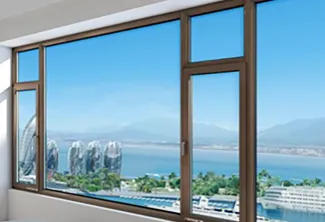
The Evolution of Aluminum Windows: Strength, Coatings, Variety
Views:413Publish Time: 2025-12-31
For over a century, aluminum has redefined window design—from its early 20th-century debut as a durable, lightweight alternative to wood and steel, to today’s high-performance thermal-break systems. Unlike steel’s corrosion issues or wood’s maintenance demands, aluminum offered inherent strength and slim profiles, enabling larger glass expanses.
Modern aluminum windows rely on three core alloy series: 6063 (excellent extrudability and finish) and 6061 (higher strength for structural spans). Key to their longevity is **spray coating technology**. Polyester powder coating, introduced in the 1960s, gave way to superior **PVDF (polyvinylidene fluoride)** coatings in the 1970s, offering 30+ years of UV and salt-spray resistance. Today’s leaders include **AAMA 2604** (high-performance architectural coatings) and **AAMA 2605** (superior weatherability). Eco-friendly **anodizing** remains popular for metallic finishes, while **fluorocarbon spraying** delivers unlimited color options.
Aluminum window profiles fall into three categories:
- **Non-thermal-break** (basic sliding windows)
- **Polyamide strip thermal-break** (energy-efficient casement and tilt-turn)
- **Foam-filled thermal-break** (passive-house certified systems)
With recycled content up to 95% and cradle-to-cradle certifications, aluminum remains the sustainable choice—marrying slim aesthetics, hurricane resistance, and smart coating technologies for the circular economy.
Keywords: aluminum window profile, aluminum profile, aluminum window
Latest NewsBack to list
The Evolution of Aluminum Windows: Strength, Coatings, Variety
For over a century, aluminum has redefined window design—from its early 20th-century debut as a durable, lightweight alternative to wood and steel, to today’s high-performance thermal-break systems. Unlike steel’s corrosion issues or wood’s maintenance demands, aluminum offered inherent strength and slim profiles, enabling larger glass expanses.
Aluminum Profile: The Silent Backbone of Modern Industry
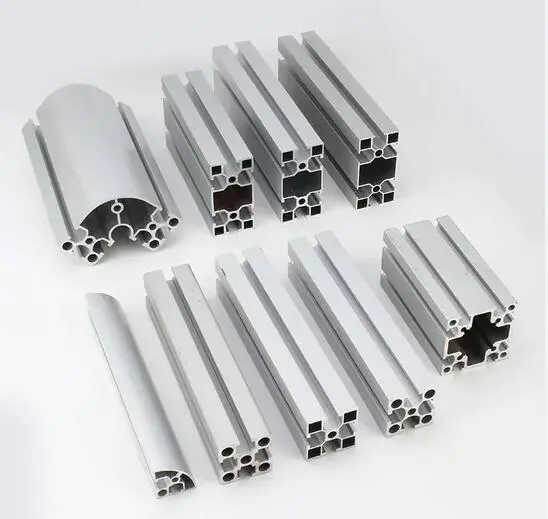
Aluminum Profile: The Silent Backbone of Modern Industry